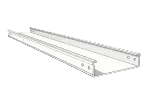
cable tray
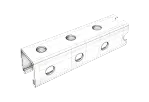
Formed via integrated stamping; ensures balanced heat dissipation and temperature control; features drainage holes to prevent water accumulation and resist moisture-induced corrosion.
 [language-switcher]

 August 27, 2026
Cable tray ladder systems provide an open, structured pathway for routing and supporting power, control, communication and other electrical cables. Their side-rail-and-rung construction supports ventilation, cable access, installation flexibility and future system expansion.
However, selecting a cable ladder requires more than choosing a material or tray width. Cable load, support span, rung spacing, installation environment, surface treatment, fittings and project standards must all be evaluated together.
Shandong Hongfeng Power Technology Co., Ltd. manufactures cable tray systems in different materials, specifications and surface finishes. The company operates six cable tray one-time forming production lines, four semi-automatic accessory production lines, automatic spray-coating equipment and semi-automatic welding lines. These capabilities support straight sections, elbows, accessories and customized project requirements.
A cable tray ladder consists of two longitudinal side rails connected by regularly spaced transverse rungs. The resulting structure resembles a ladder and creates an open pathway that supports cables while allowing ventilation and access along the cable route.
Ladder-type trays are frequently selected for projects involving substantial cable quantities, long cable runs or regular system modifications. The final design should always be matched to the cable type, cable weight, environmental conditions and required support arrangement.
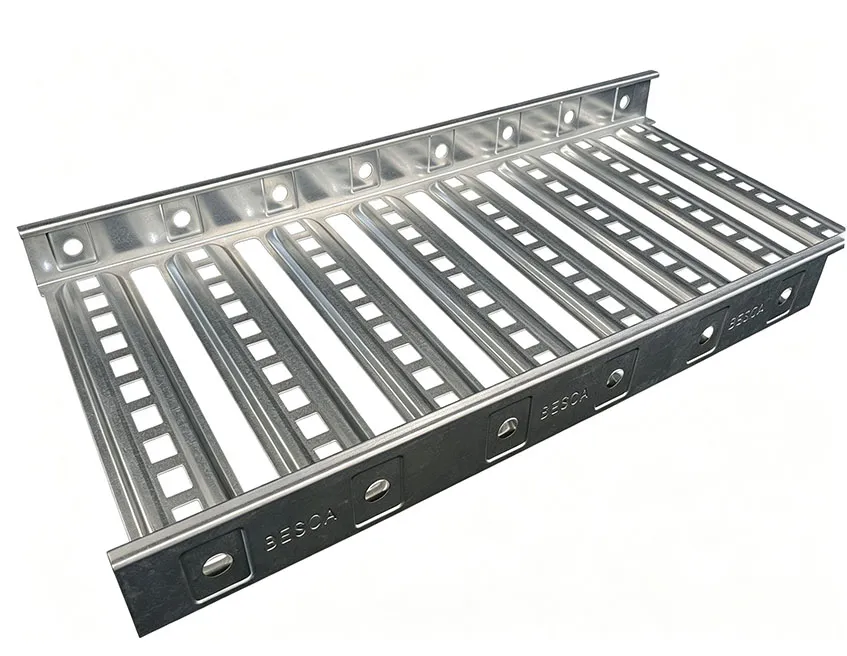
The main structural elements of a cable tray ladder are its side rails and rungs.
The side rails provide longitudinal strength, while the rungs support the cables across the tray width. Straight ladder sections can be combined with horizontal elbows, vertical elbows, tees, crosses, reducers, connectors, covers, dividers and supporting components to create a complete routing system.
Hongfeng’s forming, punching, bending, welding and coating capabilities allow straight tray sections and matching accessories to be produced for different project layouts. Dimensions, material thickness, surface finish and accessory compatibility should be confirmed according to the project specification before ordering.
The rungs distribute cable weight across the tray structure, while the side rails transfer the load to the supporting brackets or frames.
Because the bottom is open, installers can secure cables directly to the rungs using suitable clamps, cleats or ties. The open design also makes it easier to inspect, add, remove or reroute cables without dismantling an enclosed tray system.
Actual cable loading depends on factors including:
The permitted load and support span should therefore be confirmed using the selected product specification rather than a general category description.
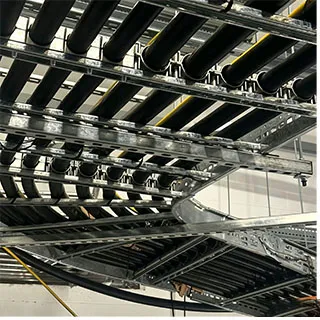
A standard cable tray ladder is intended for general cable-routing applications where the calculated cable load and support span remain within the product’s rated capacity.
It provides open cable access and can be combined with standard fittings and supports. Typical applications include commercial buildings, factories, power distribution areas, communication facilities and general infrastructure projects.
Buyers should not rely on the term “standard” alone. Tray dimensions, material thickness, rung spacing, surface finish and load requirements still need to be specified.
Stainless steel cable ladders are commonly evaluated for projects where corrosion resistance, hygiene or exposure to aggressive environments is important.
Potential applications include chemical processing, food-related facilities, coastal projects and selected industrial environments. The required stainless steel grade must be defined because different grades do not provide identical resistance to chlorides, chemicals or temperature conditions.
Stainless steel availability, grade, thickness and surface condition should be confirmed at the quotation stage.
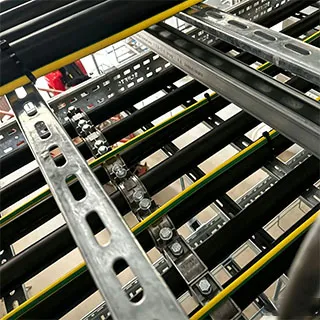
A ladder-type cable tray is commonly selected because it combines structural cable support with an open, accessible design.
Its principal advantages include ventilation, cable accessibility, routing flexibility and the ability to accommodate future system changes. These benefits depend on correct sizing, support design and installation.
The open space between the rungs allows air to circulate around the installed cables. This can support heat dissipation and simplify visual inspection.
However, the tray itself does not eliminate the need for electrical cable derating calculations. Cable grouping, ambient temperature, loading depth and applicable electrical regulations must still be considered by the project engineer.
Cable ladders are frequently used for heavier cable routes because their side rails and rungs create an efficient structural system.
A longer support span can reduce the number of support points, but it can also increase bending stress and deflection. The acceptable span must therefore be based on the selected ladder model, tray width, material, cable load and permitted deflection.
No single support span or load value applies to every Hongfeng cable ladder. These figures should be confirmed for the specified product.
The open construction gives installers access to the cable route from above and below. Cables can be laid, fixed, inspected or replaced without removing a continuous bottom panel.
This accessibility can help reduce installation and maintenance time, particularly in facilities where cable systems are expanded or modified regularly.
Cables can enter or leave a ladder tray between the rungs or through planned fittings at different points along the route.
Appropriate edge protection, bending radius and cable support must be maintained. Cables should not be pulled across sharp edges or routed in a way that creates excessive mechanical stress.
A cable ladder can accommodate future changes when sufficient usable space and structural capacity have been reserved.
Project designers should calculate both the initial cable requirement and anticipated expansion. Leaving space alone is not sufficient if the additional cable weight would exceed the rated system load.
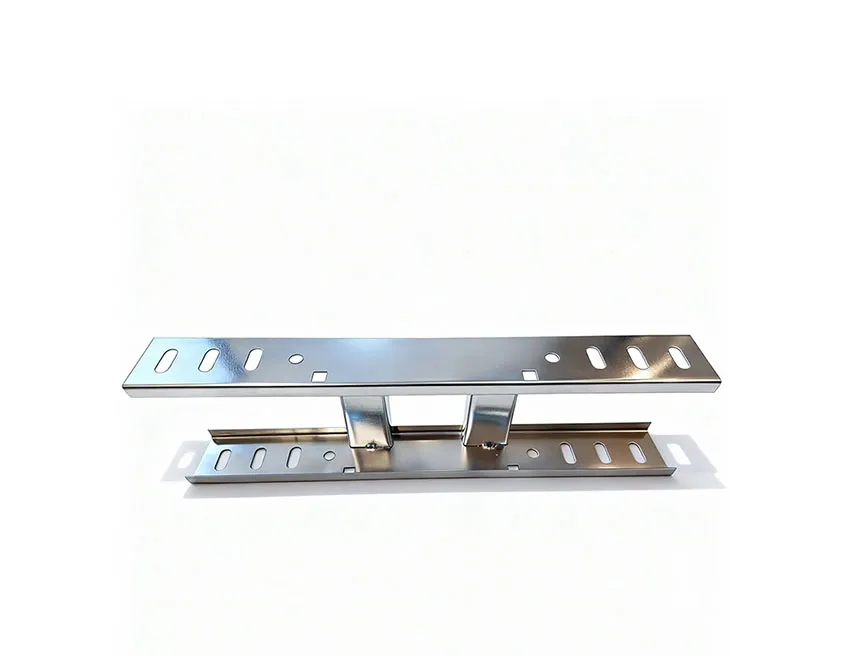
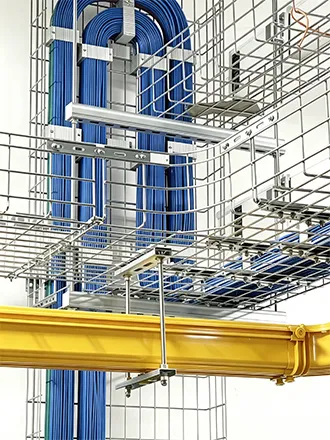
A suitable cable tray ladder must be selected as part of a complete system rather than as an isolated straight section.
Before requesting a quotation from Shandong Hongfeng Power Technology Co., Ltd., buyers should prepare:
Hongfeng provides technical consultation, solution customization and after-sales support. Standard products are documented with a delivery period of approximately 3–5 days, while customized products are documented with a production period of approximately 7–15 days. These periods should be reconfirmed based on order quantity, specification and current production scheduling.
The company’s submitted qualifications include CE, IEC 61537 and ISO 9001 certification, together with multiple product patents. Certification scope and applicable product models should be verified before the documents are used for project approval.
Cable tray ladder systems provide an accessible and ventilated solution for routing cables in commercial buildings, industrial facilities, power projects, transportation systems, communication facilities and other infrastructure.
Successful selection depends on verified cable loading, tray dimensions, support span, rung spacing, material, finish, fittings and installation conditions. Generic product descriptions should not replace model-specific engineering data.
Shandong Hongfeng Power Technology Co., Ltd. combines six cable tray forming lines, four accessory production lines, automatic spray-coating equipment and semi-automatic welding equipment to support straight sections, fittings and customized project requirements. Its documented product diversity, full-process quality control, accessory inventory and technical service capabilities make it a potential manufacturing partner for cable tray ladder projects requiring coordinated products and accessories.
There is no universal lifespan for every cable ladder.
Service life depends on material, surface treatment, corrosion exposure, cable loading, installation quality and maintenance. Buyers should avoid using a fixed lifespan claim unless it is supported by product-specific documentation and defined environmental conditions.
Yes. Hongfeng produces cable tray systems in different materials, specifications and surface finishes.
Its forming, punching, bending, welding and coating equipment also supports customized straight sections and accessories. Buyers should provide technical drawings and project conditions so that manufacturability can be reviewed.
Inspect the system periodically for corrosion, deformation, loose connectors, damaged coatings, overloaded sections and unsecured cables.
Dust and debris should be removed where they affect ventilation or inspection. Grounding and bonding connections should also be checked according to the facility’s maintenance plan.
Standards and certification cannot be applied automatically to every cable ladder in the market.
Hongfeng’s submitted company information identifies CE, IEC 61537 and ISO 9001. Buyers should request the relevant certificate or test documentation and confirm that its scope covers the ordered product, material, dimensions and performance requirements.
There is no universal lifespan for every cable ladder. Service life depends on material, surface treatment, corrosion exposure, cable loading, installation quality and maintenance. Buyers should avoid using a fixed lifespan claim unless it is supported by product-specific documentation and defined environmental conditions.
Yes. Hongfeng produces cable tray systems in different materials, specifications and surface finishes. Its forming, punching, bending, welding and coating equipment also supports customized straight sections and accessories. Buyers should provide technical drawings and project conditions so that manufacturability can be reviewed.
Inspect the system periodically for corrosion, deformation, loose connectors, damaged coatings, overloaded sections and unsecured cables. Dust and debris should be removed where they affect ventilation or inspection. Grounding and bonding connections should also be checked according to the facility’s maintenance plan.
Standards and certification cannot be applied automatically to every cable ladder in the market. Hongfeng’s submitted company information identifies CE, IEC 61537 and ISO 9001. Buyers should request the relevant certificate or test documentation and confirm that its scope covers the ordered product, material, dimensions and performance requirements.
We will reply you within 24 hours. If for urgent case, please add WhatsApp/WeChat:+86 188 6519 8768, Or call +86 188 6519 8768 directly.
We respect your confidentiality and all information are protected.
We will only use your information to respond to your inquiry and will never send unsolicited emails or promotional messages.
 Inquiry